

Accessibility Accommodations: If you need special disability accommodations for accessing any information on this website, please contact Professional & Continuing Education. For accommodations for an event, workshop, or online or on-campus class, please contact the Accessibility Resource Center.
Certificate in Neurodiversity for Educators & Professionals
Program Highlights | Courses | Faculty | Apply to the Program | Schedules
A Strengths-Based Approach for Success
Chico State's fully online Certificate in Neurodiversity for Educators & Professionals is an interdisciplinary and data-driven program that blends practical strategies with reflective inquiry, prioritizing student voice, educational justice, and the role of educators as advocates for systemic change.
Participants will explore the concept of neurodiversity through a strengths-based and identity-affirming lens. Rather than focusing solely on diagnosis or remediation, the program emphasizes inclusive strategies that honor the diverse ways students think, learn, and engage with the world. It integrates current research from education, neuroscience, and disability studies to help educators create equitable and supportive environments where all students can thrive.
About the Certificate in Neurodiversity for Educators & Professionals
This micro-credential is designed for current and future education and clinical professionals who want to better support neurodivergent learners in inclusive, affirming, and evidence-based ways. Whether you're a classroom teacher, special education professional, speech pathologist, occupational therapist, teaching assistant, counselor, or paraprofessional, this program offers accessible, high-impact training—no prior experience with neurodiversity required.
- The five-month, non-credit program consists of six courses.
- Courses are fully online, asynchronous with self-paced coursework. There will be optional opportunities to engage with instructors and other learners through office hours, chat rooms, and collaborative time.
- Fees are $400 per course and are paid for each course at the time of registration. The total to complete the entire six-course program is $2,400.*
- Educators may purchase professional development credits for $85/per one-unit course to apply toward salary steps.

Curriculum
 Courses are designed to be flexible, relevant, and immediately applicable—empowering educators and professionals alike to transform their classrooms and institutions into places where neurodivergent learners are not only included but truly valued. You can expect to spend approximately 15 hours per course on assignments and activities, plus additional time for reading, reflection, and/or research.
Courses
Complete all courses to earn the certificate and badge affirming that you are a Certified Specialist in Neurodiversity and Equitable Learning, or choose to take a selection of courses of interest. The Introduction to Neurodiversity course is required of all participants. Read class descriptions.
- Introduction to Neurodiversity in School-Based and Clinical Settings
- Evidence-based Practices in Neurodiversity for Educators and Professionals
- Assistive Technology and Digital Accessibility for Neurodivergent Populations
- Culturally Responsive and Trauma-Informed Teaching for Neurodivergent Individuals
- Communication, Collaboration, and Self-Advocacy for Educators and Professionals
- Applied Project or Practicum in Neurodiverse Education
Learning Outcomes:
- Confidently support neurodivergent learners using inclusive, evidence-based, and strengths-focused practices tailored to diverse settings.
- Create accessible curriculum and learning environments that integrate evidence-based practices, assistive technology, and trauma-informed approaches.
- Promote equity and belonging by addressing systemic barriers, bias, and stigma through culturally responsive teaching and collaborative partnerships.
- Demonstrate leadership in inclusive education by designing and implementing a real-world project that advances neurodiversity-affirming practices in your classroom, program, institution, or clinical setting.
Faculty
 Dr. Josie Blagrave is chair of the Department of Kinesiology at Chico State and a co-founder of the Neurodiversity & Disability Symposium. For over 15 years, she has served as the director of the Autism Clinic at Chico State, championing inclusive practices and support for disabled students across the campus and the California State University system. Dr. Blagrave’s research focuses on amplifying autistic voices, enhancing health outcomes for autistic individuals and their families, and fostering acceptance, belonging, and improved supports in educational and physical activity settings.
 Cam Lesslie is an instructor in the Department of Kinesiology at Chico State and serves as the coordinator of the university’s Autism Clinic. Cam holds an M.A. in Adapted Physical Education and works directly with autistic children and adolescents, using neuroaffirming practices to support the development of object-control and gross motor skills.
 Tal Slemrod is an associate professor and coordinator for the educational technology and distance learning program through Chico State's School of Education. His 2022 Outstanding Professor award highlights his focus on creating a better world and more equitable schools for underserved children and their teachers.
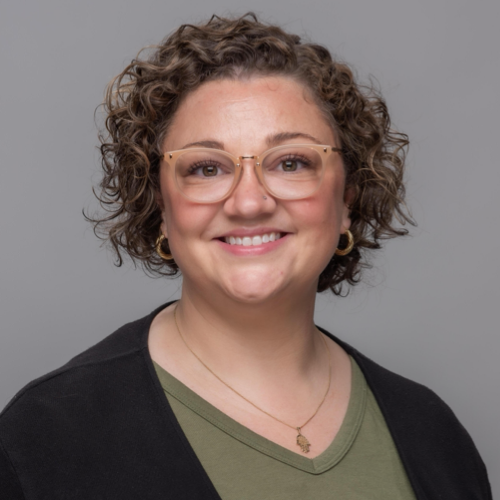 Shannon Slemrod is a Licensed Professional Clinical Counselor working in Chico State's WellCat Counseling Center. She holds an MA in counseling psychology, and her clinical interests include neurodiversity and mental health management.
Apply to the Program
Applications open October 1 for our Winter/Spring 2027 cohort and on April 1 for the Summer/Fall 2027 cohort. If you have questions about the program or would like to join our mailing list to be notified when the application period opens, please complete an RFI form.
* Federal loans, financial aid, or the CSU employee fee waivers are not available for this program. Other options, such as loans, may be available.